

My Big Greek Thinking
The ‘need to know’ about Socrates, Plato and Aristotle, a short story recommendation worth lingering over and, as always, great book recommendations
Socrates, Plato and Aristotle: the Big Hitters of Ancient Greek Philosophy
This week, I’m reviewing Plato’s book, The Symposium. It’s not quite novel, so if you’re only a fiction reader, it probably won’t appeal. However, even if you don’t feel the need to pick yourself up a copy, it’s sort of important to have a basic understanding of where it comes from. I have an old relationship with Ancient Greek, as I spent three years at school studying it, and basically doing hours of work declining cases, deciphering clauses and reciting aorists, and (believe it or not) I was very solid at this whole Greek thing. It resonated with me. And compared to Latin, which I was less stellar at, I respected the messiness and chaos of Greek culture & syntax versus the relatively rigid and orderly vibes of the Roman polis & lingua.
Also, there was the whole philosophy thing of which the Greeks were basically inventors. It’s what made them Greek! Essentially, when it comes to Ancient Greek philosophy, there are three ‘bad boys’ of the field, and I can guarantee you will have heard of all of them. However, if you’re like 90% of the population, you probably aren’t totally sure of what they were about, how they fit together, and why they’re so darn important to the Western canon.
A little sidenote before we get started: in the last season of the Lit With Charles podcast, I spoke with Cosima Carnegie – the brains behind Cosi’s Odyssey, a fun vibrant account that tries to make the ancient worlds of Greece and Rome accessible and fun – and she actually talked me through what Symposia were and how they worked. If you haven’t listened to that episode, or if you’re in the mood for a refresher course, you can check out our conversation here.
Socrates
In the beginning was the word, and the word was … Socrates. Basically, when we’re talking philosophy, everything begins with him. Born in Athens around 470 BC (it’s tricky to know exactly), Socrates spent his life wandering around the city and asking questions to anyone he stumbled across, like a proto version of one of those tiny microphone, ‘man on the street’ interviews that aren’t staged at all.
Socrates’ shtick was to engage people in conversation, usually about a topic they felt confident about, or one on which they had strong opinions. Big ideas, usually stuff like justice, courage, friendship, love, or virtue. In the beginning, they’d be dead set on their opinions, and totally sure of their own rightness. However, Socrates was sneaky. He’d keep questioning them until they got less and less convinced about what they were saying, bamboozling his conversational partners, until they were ultimately forced to concede that they didn’t understand the subject nearly as well as they thought they did. This approach (question people until they start to doubt themself) was so iconic to the thinker that it became known as the Socratic Method.
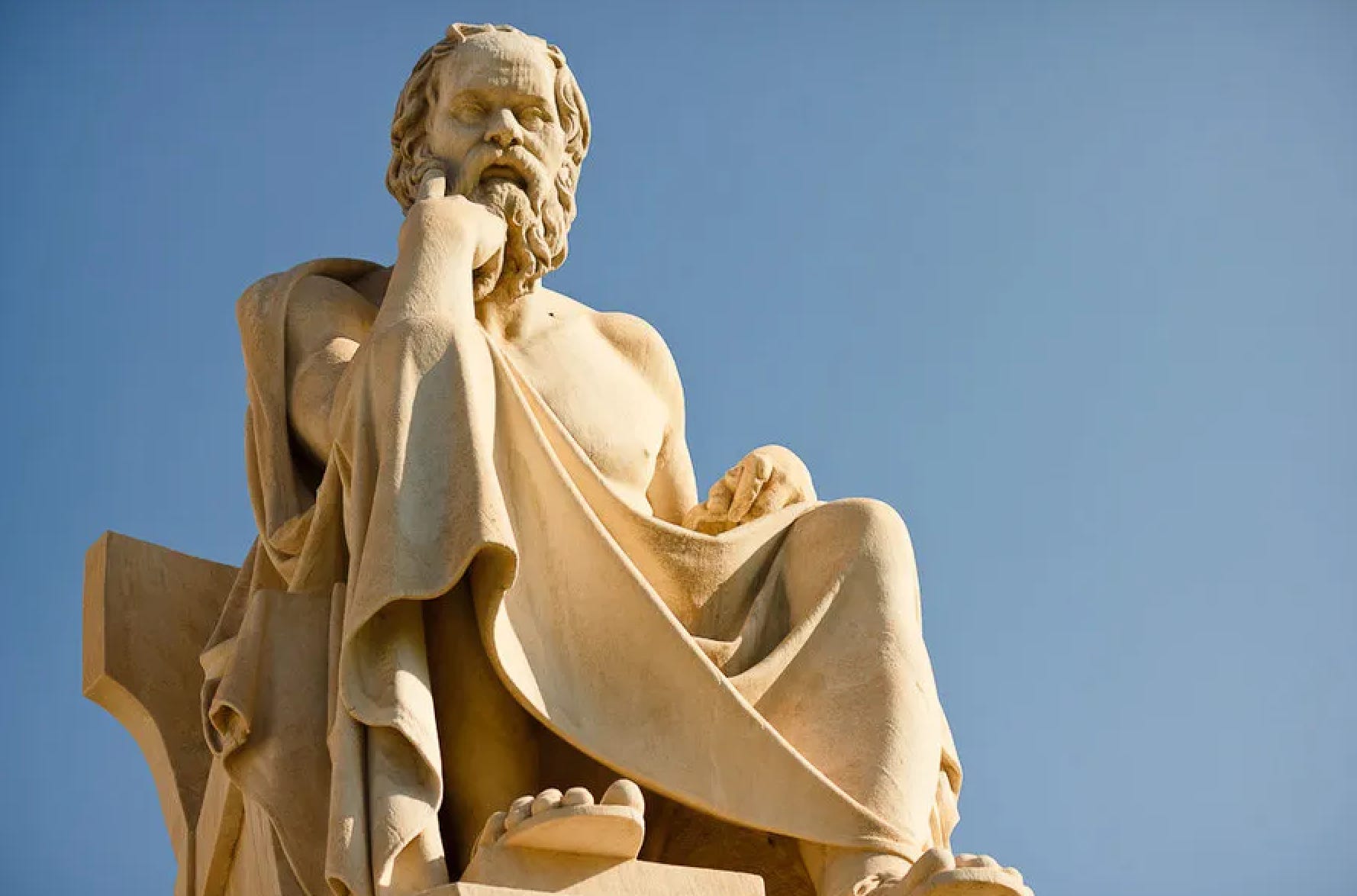
The idea at the heart of Socrates’ philosophy was a surprisingly simple one. You know how Lana Del Rey sang that life is “only worth living if somebody is loving you”? Well, Socrates felt that life is only worth living if somebody is questioning themselves, their assumptions, and their beliefs.
